



Taste got cheap. Clarity did not.
Competent design is now cheap to produce and easy to copy. The scarce part is deciding what a brand will be disliked for.
Producing something that looks professional is no longer difficult. Grids resolve themselves. Type pairs itself. A competent layout is available to anyone in the time it takes to describe one. Competence used to be the product. Now it is the floor.
What the tools actually solved
They solved execution first, because execution was mechanical. Then they solved taste, because taste turned out to be pattern recognition, and pattern recognition is precisely what these systems do. Ask for restrained and Swiss and you will get it. Ask for warm and editorial and you will get that too, at a level of finish studios were charging for not long ago.
This is not a complaint. It removes work nobody enjoyed and it raises the baseline for companies that could never afford a studio at all. It also means looking good is no longer proof of anything. Everyone in a category can now reach the same standard of finish in the same week.
When everyone can look correct, looking correct stops being a position.
Three questions decide whether there is a brand underneath the design, and none of them are about the design:
- What will this company say that its competitors will not say?
- Who is it content to lose?
- What does it refuse to do even when the numbers argue for it?
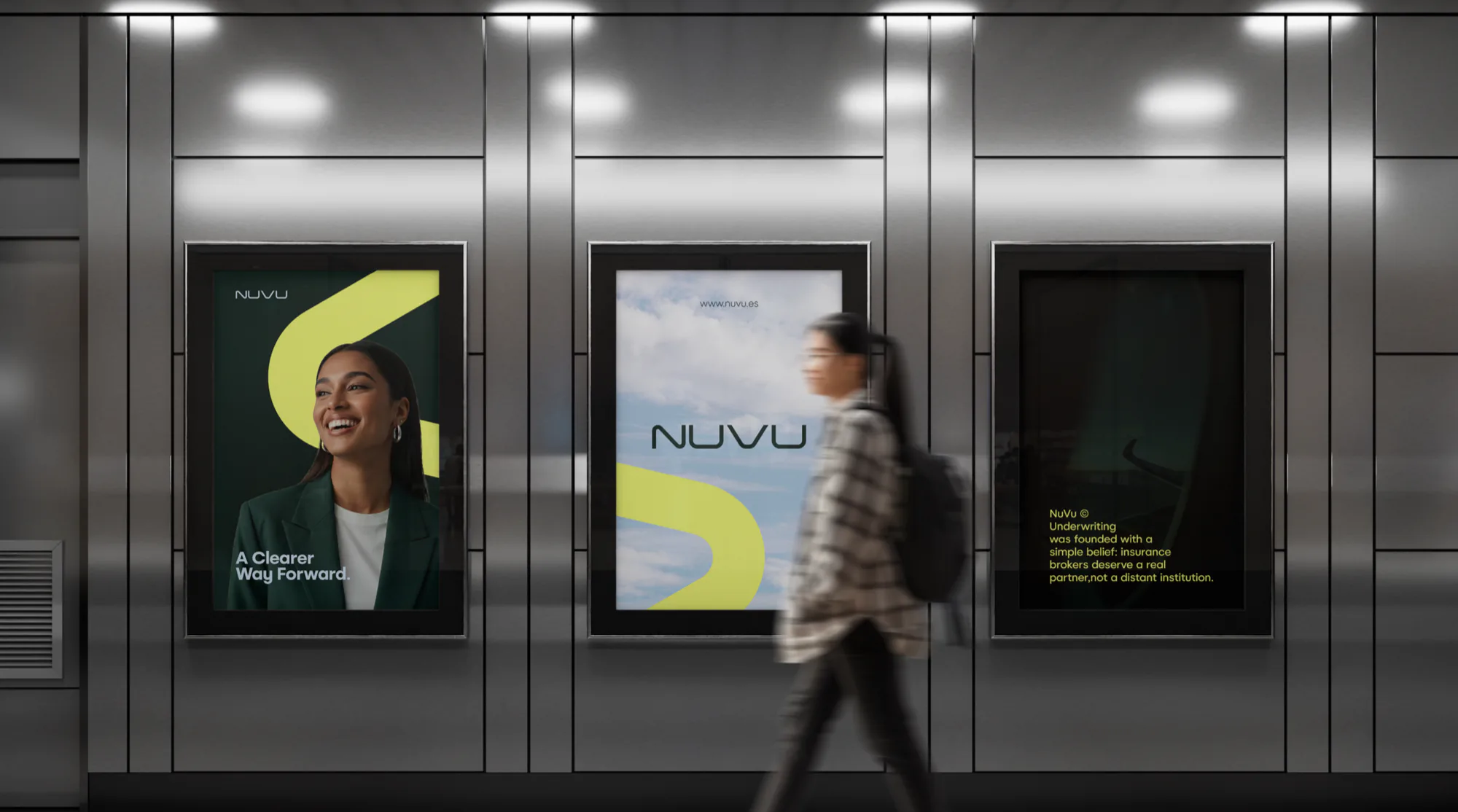
A studio that cannot get a straight answer to those three is being paid to decorate a question nobody has settled. NUVU is the version where the answers arrived first: pine and citrus in a category of navy and gold is not a palette decision, it is the second question answered out loud.
The part that still needs a person
A brand is not a look. It is a claim about what a company is for, made in public, at the cost of other claims it could have made instead. The cost is the point. If a brand costs nothing to hold, it is not doing any work.
That decision cannot be generated, because it is not a question about aesthetics. It is a question about risk. What will this company say that its competitors will not. Who is it content to lose. What does it refuse to do even when the numbers argue for it. Those answers come from people who know the business and are willing to be wrong in front of each other.
Once the answer exists, the visual work gets easier and stranger at the same time. Easier, because most of the options are now irrelevant. Stranger, because a real position rarely looks like the category average, and the category average is what every tool has been trained on.
So the work has moved. Less time making things look resolved. More time deciding what the thing is arguing, and whether anyone will hold the line when it is tested.